
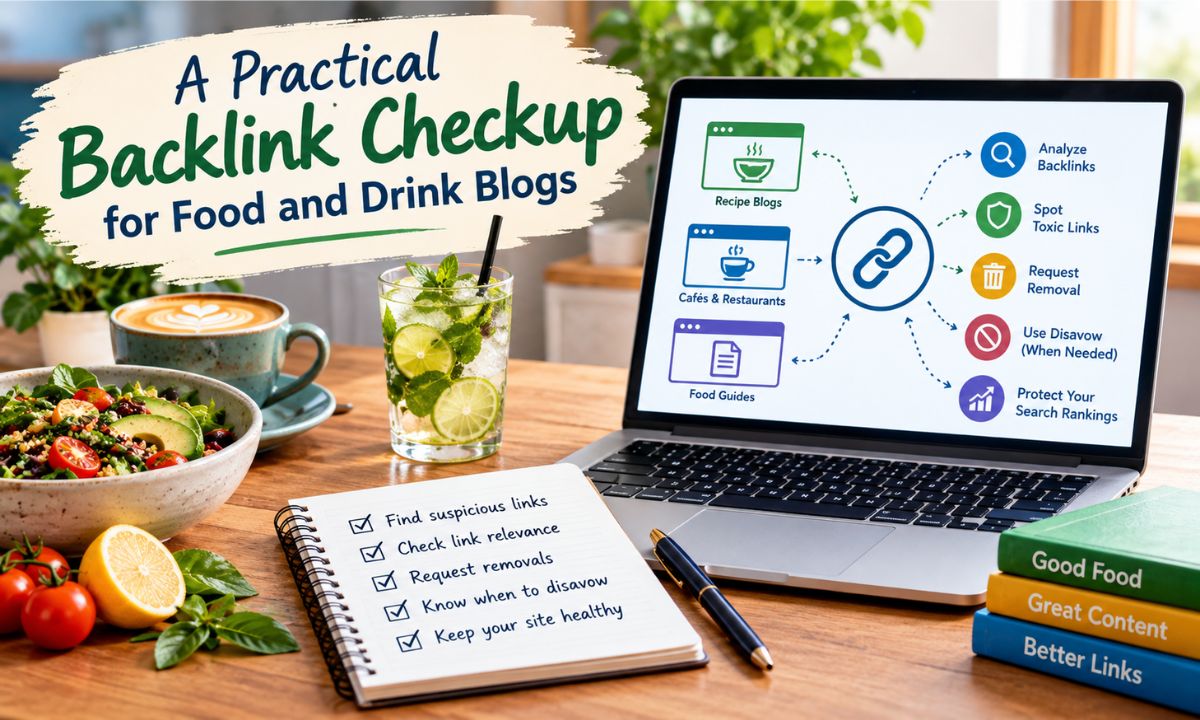
A Practical Backlink Checkup for Food and Drink Blogs
A food or drink blog can earn links in all sorts of natural ways: a cocktail recipe gets mentioned in a weekend roundup, a café links to a local guide, or another writer cites your notes on brewing coffee. Those links can help readers find your work. But a large backlink count is not automatically a healthy one, and suspicious links can make site owners worry about search rankings. A calm, evidence-based check is more useful than rushing to remove every unfamiliar link.
What a backlink audit can—and cannot—tell you
A backlink audit is a review of websites that link to yours, the pages they point to, and the apparent reason for the links. The aim is to spot patterns that may indicate manipulation, not to judge a website by whether it looks polished or has a high authority score in a commercial tool.
For example, a new food blog might receive a link from a small community recipe site with little traffic. That link may be low quality in the everyday sense, but it is not automatically harmful. A stronger warning sign would be a batch of unrelated sites publishing identical, keyword-heavy links to a page about your meal plan, especially if the links appear to have been bought or generated as part of a scheme.
Search tools can flag links for review, but their labels are estimates. Google generally distinguishes between links that violate its spam policies and links that are simply unhelpful or obscure. Before taking action, compare the tool’s findings with the pages themselves and look for a pattern. A useful overview of toxic backlinks and cleanup can help clarify that distinction.
Review links with context
Start by gathering backlink data from Google Search Console and, if useful, one or more SEO tools. Export the results and group them by linking domain, target page, and anchor text. Looking at domains in batches makes repeated patterns easier to spot than inspecting a long list one URL at a time.
For each group that concerns you, ask a few practical questions:
- Does the linking page exist and contain a real article, directory entry, or discussion?
- Is the subject reasonably connected to food, drink, hospitality, local businesses, or another topic relevant to your site?
- Does the link appear editorial, or is it surrounded by unrelated links and commercial keywords?
- Are many domains using the same wording or pointing to the same page in a suspiciously uniform way?
- Do you have a manual action notice or other specific evidence of a link scheme?
A single strange-looking domain is rarely enough to establish that your site is at risk. On the other hand, a clear pattern of paid links, automated placements, or links created to manipulate rankings deserves careful attention. Keep notes about why you marked each group for review. This reduces the chance of making a sweeping decision based on one metric or a tool’s alarming label.
Request removal before considering disavow
If you find links you or someone working for you deliberately arranged in violation of search policies, first identify who controls them. For a placement on a site you own, remove it. If another publisher controls the page, send a concise, polite request asking for the link to be removed or changed. Keep a record of the page, the date, and any reply; repeated messages to unresponsive site owners are unlikely to improve the outcome.
The disavow tool is not a routine way to tidy a backlink report. Google says most sites do not need it, and using it incorrectly can discount links that were helping your pages. It is generally a measure to consider when there is a substantial pattern of artificial links and a manual action, or a credible risk of one, after reasonable removal efforts. If the evidence is uncertain, get experienced advice before submitting a file. The tool is not a shortcut for correcting weak content or recovering from every ranking change.
Make the cleanup manageable
Set aside time for a review rather than trying to react to every new link notification. Save a dated copy of the data, record your decisions, and revisit the issue if you uncover new evidence. For a small recipe site, a simple spreadsheet with columns for domain, target page, link context, action, and notes may be enough. If the task becomes technical, a freelance specialist can help with analysis or documentation. Marketplaces such as Osdire cover categories from marketing and writing to programming, with flat pricing and payment held during an order until the buyer approves the delivered work.
Prevention is mostly about how you grow your site. Publish recipes, tasting notes, guides, and useful local coverage that other people have a genuine reason to cite. Be cautious about offers promising a fixed number of links or instant ranking gains, and keep a record of any marketing work commissioned on your behalf. If a partner proposes link placements, ask where they will appear and whether readers would find them useful.
Backlinks should support the work readers already value, not become a source of constant anxiety. Review the evidence, separate ordinary low-quality links from deliberate manipulation, and choose the least risky response. A measured process protects your time—and leaves more of it for testing recipes, improving photographs, and writing the next article.